
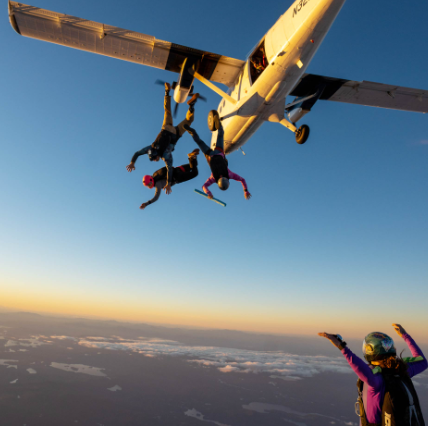
Skydiving is an exhilarating sport that combines thrill with a deep sense of freedom. However, one of the critical components to enjoy a safe and stable freefall is mastering exit techniques. Understanding these techniques enhances both your safety and enjoyment as you leap from the plane.
1. Proper Body Position for Exit
As you approach the exit, your body position is crucial for achieving stability. An optimal exit position involves a relaxed, neutral stance where your arms and legs are slightly bent. This allows you to maintain a streamlined posture while minimizing unwanted rotation or wobbling as you leave the aircraft.
Another important aspect of body position is the alignment of your head with your spine. Keeping your head slightly up lets your body orient itself properly as you exit. Think of it as a natural extension, allowing your body to cut through the air seamlessly. Practice this positioning during ground training to build muscle memory before your jump.
-
- Position yourself with your arms slightly bent and at your sides.
-
- Tuck your chin slightly to keep your head aligned with your spine.
-
- Maintain a neutral torso with a slight arch in your back.
-
- Keep your legs bent at the knees with your feet together.
2. Timing Your Exit
Timing your exit is critical when transitioning from the airplane to freefall. Understanding when exactly to leave the aircraft can help with both stability and overall jump performance. Ideally, you want to exit when the jump is clear of other divers and the airspeed of the aircraft is optimal for a smooth transition into freefall.
Count to three after you reach a stable point at the door before jumping out. This countdown helps give you a moment to visualize your body position and ensures you’re mentally prepared for the thrilling plunge. Jumping too soon or too late can cause instability and potentially lead to issues during your fall.
-
- Wait for the signal from your instructor before preparing to exit.
-
- Engage your core and focus on your body position before jumping.
-
- Practice counting slowly to three before your jump.
-
- Maintain clear communication with your jump team to ensure coordination.
3. Using Visual References During Freefall
Once in freefall, visual references become invaluable for maintaining stability. Focus on an object in the distance or the horizon to help orient your body and prevent spinning. This technique gives you a reference point to gauge your rotation and maintain a stable position throughout your fall.
Additionally, practice scanning your surroundings to gather key visual cues that assist in aligning your body. Training your eyes to recognize shapes, colors, and familiar landmarks can enhance your freefall performance and provide a sense of control, even in the chaotic environment of open air.
-
- Identify a visual marker before you exit for better orientation.
-
- Look for the horizon, as it offers a stable reference point.
-
- Practice keeping your head aligned with your cervical spine.
-
- Mind your surroundings—stay aware of nearby jumpers and obstacles.
4. Practicing Stable Freefall Techniques
Repetition is essential in mastering stable freefall techniques. Consider scheduling practice jumps specifically focusing on exit strategies and freefall positions. This dedicated practice enables you to analyze your performance regularly, enhancing your skill level over time.
Additionally, recording your jumps and reviewing the footage can provide crucial insights into your technique, body position, and any habitual issues. Seek feedback from instructors or seasoned skydivers to guide your improvement. Regular practice and feedback loops help solidify your competence in stable freefall.
-
- Schedule regular training jumps focused solely on exit and freefall.
-
- Record your jumps for thorough review and critique.
-
- Seek mentorship from experienced skydivers.
-
- Engage in body and core exercises to enhance your control during freefall.
Mastering skydiving exit techniques ensures a safer, more enjoyable experience. By focusing on body position, timing, visual references, and consistent practice, you can make your freefall a thrilling and safe adventure. Consider seeking guidance from professional instructors and investing time in dedicated practice to continue evolving your skills.