
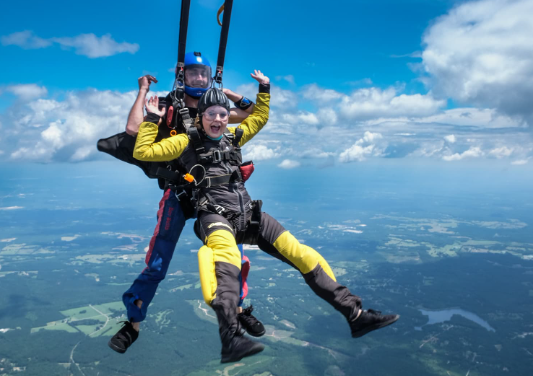
Skydiving is an exhilarating sport that offers a unique perspective on our world from thousands of feet above. For beginners, understanding the various altitudes and how each affects your skydiving experience is essential for a safe and enjoyable jump. This blog post will break down the skydiving altitude chart to help you grasp the importance of altitude in your skydiving journey.
1. Understanding Drop Zones and Elevation
Drop zones refer to specific areas designated for skydiving, where jumpers exit the aircraft and land safely. The elevation of these zones can significantly impact your dive. High drop zones yield unique atmospheric conditions that can affect body positioning and stabilize during freefall. For instance, jumps from an elevation of 10,000 feet generally allow for a freefall of about 30 seconds before deploying the parachute.
It’s essential to know your drop zone’s altitude to anticipate how your body will react at different heights. The atmospheric pressure decreases as you ascend, making your jumps more exhilarating. Higher altitudes also allow for longer freefall, which can be enticing for first-time jumpers looking for an adrenaline rush.
-
- Research the specific elevation of your drop zone.
-
- Consider the weather conditions at various altitudes.
-
- Know the standard altitude for tandem jumps (usually around 10,000-14,000 feet).
-
- Prepare for atmospheric changes during your jump.
2. Freefall Altitudes: A Detailed Look
The freefall portion of your jump is where the fun happens! Typically, skydivers jump from altitudes between 10,000 to 15,000 feet, offering a range of freefall durations. At around 12,000 feet, freefall lasts approximately 50 seconds, while jumping from 15,000 feet can extend that to over a minute. Understanding the freefall altitude is crucial, as it lets you experience the thrill of freefalling while also ensuring safe parachute deployment.
However, the excitement of freefalling doesn’t mean you should disregard safety protocols. Each jump will require you to deploy your parachute at a specific altitude, generally around 3,000 to 5,000 feet. Knowing when and how to deploy can drastically improve your chances of a safe landing.
-
- Know the recommended deployment altitude for your jump (typically 3,000 to 5,000 feet).
-
- Practice body positioning to ensure stable freefall.
-
- Communicate with your instructor about freefall techniques.
-
- Always check your gear before jumping for reliability.
3. The Importance of Altitude for Parachute Deployment
Understanding altitude is not just about enjoying the thrill of freefall; it’s also about parachute safety. The elevation at which you deploy your parachute matters significantly and can dictate the success of your landing. Most experienced skydivers aim to pull their parachutes at 3,000 feet for optimal control and safety. Deploying too high might lead to an extended descent but less control, while deploying too low can compromise the parachute opening.
Knowing your altitude is particularly important for new jumpers. Rely on altitude indicators and your instructor’s guidance. Advanced skydivers can manage the nuances of altitude, but beginners should focus on mastering the basics to ensure a safe and enjoyable leap into the sky.
-
- Use an audible altimeter to ensure timely deployment.
-
- Practice altitude awareness during training dives.
-
- Pay close attention to instructor’s deployment altitude recommendations.
-
- Stay calm; anxiety can affect your decision during the jump.
In conclusion, understanding the skydiving altitude chart is crucial for a safe and thrilling skydiving experience. Familiarizing yourself with drop zones, freefall altitudes, and parachute deployment will make you a more competent and confident jumper. Don’t hesitate to consult with experienced instructors as you prepare for your first jump; their guidance is invaluable. Happy jumping!