
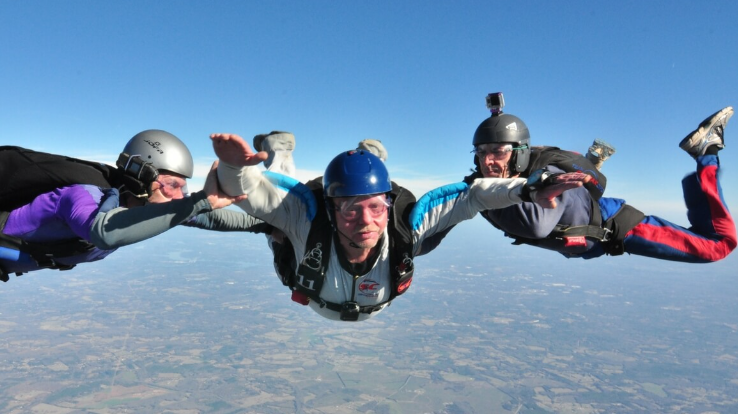
Skydiving is not only an exhilarating sport but also requires a clear understanding of licensing levels. Among these, the A License and B License serve different purposes for skydivers looking to advance their skills and enjoyment of the sport. In this blog post, we’ll dive deep into the differences between the A License and B License in skydiving.
1. Understanding the A License
The A License is the first major milestone for any skydiver. Obtaining this license requires completing a series of jumps, demonstrating foundational skills, and mastering the safety protocols essential for solo skydiving. Generally, a skydiver must have made at least 25 jumps to qualify for the A License, which also mandates a series of ground training sessions and checks.
This license allows you to jump without the need for a licensed instructor directly supervising each jump. You’ll be expected to safely carry out jumps and complete basic maneuvers, plus land accurately in designated zones. This foundational license is crucial for building your confidence and competence in the sport.
-
- Complete a minimum of 25 jumps for practical experience.
-
- Participate in ground training sessions about safety protocols.
-
- Demonstrate proper exit techniques and parachute control.
-
- Learn how to handle malfunctions and emergency procedures.
2. Advancing to the B License
The B License takes your skydiving skills to the next level. To qualify for this license, you generally need to have completed at least 50 jumps, including some specific requirements such as flying your canopy for a full 90 seconds before deploying your parachute. This level signifies greater autonomy and a deeper understanding of the various aspects of skydiving.
-
- Complete a minimum of 50 jumps before applying.
-
- Demonstrate advanced canopy control and stability.
-
- Learn and practice group jump protocols.
-
- Engage in jumps that require more complex maneuvers.
3. Key Differences Between A and B Licenses
While both the A and B licenses serve to elevate your skydiving experience, they come with distinct differences. The A License allows you to jump solo but is primarily focused on safety and basic skills. Meanwhile, the B License emphasizes more advanced flying techniques, allowing you to join experienced jumpers and dive into more complex maneuvers.
Another key difference revolves around community participation and events. With a B License, you gain access to a wider range of skydiving competitions and events, thus enhancing your social and professional skydiving network. This distinction can greatly enrich your overall skydiving experience.
-
- A License focuses on basic solo jumps; B License expands to group jumps.
-
- The B License allows participation in competitions and advanced maneuvers.
-
- Community access increases with a B License.
-
- Both licenses require a different number of jumps and skills.
4. Why Should You Pursue a B License?
Pursuing a B License offers numerous benefits, particularly for those who are serious about advancing in the sport. Acquiring this license transitions you from basic safety skills to a more professional level, enhancing your enjoyment of skydiving as you take on new challenges. It allows you to join advanced jumpers, participate in group formations, and even get involved in the competitive scene.
Additionally, having a B License can also improve your understanding of the sport. You’ll delve deeper into areas such as aerodynamics, advanced safety protocols, and parachute technology. This knowledge not only enhances your jumps but also equips you to teach and guide newcomers effectively.
-
- Enhance your skills and master advanced maneuvers.
-
- Join a community of experienced skydivers for support and networking.
-
- Participate in competitions to challenge yourself further.
-
- Gain a deeper understanding of skydiving safety and aerodynamics.
In conclusion, both the A and B Licenses are vital steps in your skydiving journey, each fostering growth and promoting safety. Whether you’re just starting or looking to advance, focusing on obtaining your B License can significantly enhance your skills and experience in skydiving. So don’t hesitate—take the leap and secure your future in the skydiving community!