
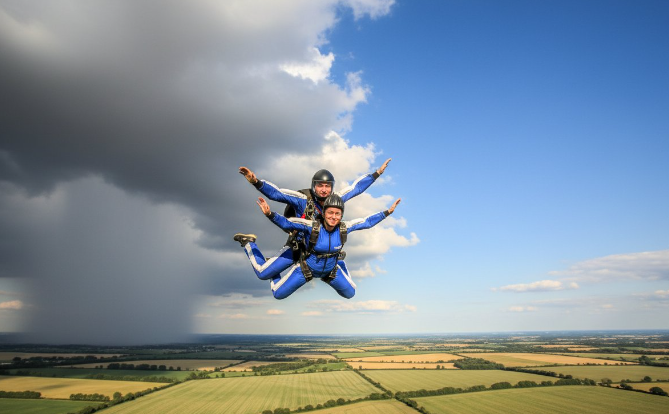
Skydiving is an exhilarating adventure that many thrill-seekers look to experience, but what happens when the weather takes a turn? One of the most frequently asked questions by potential skydivers is whether they can skydive in the rain. In this blog post, we’ll delve into the weather rules surrounding skydiving and what you need to know if you’re considering a jump on a rainy day.
1. The Impact of Rain on Skydiving Conditions
Skydiving in the rain presents several challenges that can impact both safety and enjoyment. For instance, rain can reduce visibility significantly. Cloud cover and overcast skies may limit a skydiver’s ability to see the landing area or navigate effectively. This is crucial because clear visual references are essential for a successful and safe landing.
Moreover, wet conditions can affect the parachute’s performance. A wet parachute can become heavier, which may alter its rate of descent and maneuverability. This could lead to unexpected behaviors during a jump, including increased risks of collisions or improper landings. Carrying out a jump in such conditions may not only be uncomfortable but potentially hazardous.
-
- Check weather forecasts for rain and visibility.
-
- Consult local skydiving schools about their rain policies.
-
- Consider waiting for a clearer day for optimal conditions.
-
- Understand how wet conditions affect parachute performance.
2. Safety Concerns and Regulations
Safety is paramount in skydiving, and regulations often dictate that jumps be postponed during adverse weather conditions. Most skydiving operations follow strict guidelines regarding when it’s safe to jump. Factors like wind speed, cloud cover, and precipitation all play a role in determining whether a jump is feasible. Typically, if rain is accompanied by high winds or storms, skydiving will be canceled.
It’s also important to note that instructors are trained to recognize weather-related risks. They’ll assess the conditions and make judgment calls that prioritize the safety of both the jumpers and the ground crew. This means that even if you’re eager to jump, the final decision rests with the professionals, and it’s crucial to respect their expertise and decisions.
-
- Always prioritize safety over the desire to jump.
-
- Trust your instructor’s decision regarding weather conditions.
-
- Stay informed about local regulations on skydiving.
-
- Have a plan for a reschedule if your jump is canceled.
3. Preparing for a Skydiving Experience in Uncertain Weather
If you are determined to skydive but are facing uncertain weather, preparation is key. Before arriving at the drop zone, ensure that you have all necessary gear ready and check the weather reports frequently. Early morning or late afternoon often provides clearer skies compared to midday when rainstorms are more likely. If rain is forecast, consider rescheduling your jump to a more favorable day.
Engaging in a conversation with your skydiving center can also provide insight into what to expect. Staff will be able to offer information about best practices during uncertain weather. They may also have recommendations for close-by areas where weather conditions are more favorable. Always have a flexible mindset and adapt your plans according to the weather updates.
-
- Monitor weather updates leading to your jump day.
-
- Talk to your skydiving center about weather alternatives.
-
- Pack appropriate clothing for possibly damp conditions.
-
- Be prepared to reschedule and flexible with your plans.
4. Alternatives to Skydiving in Rainy Conditions
While not everyone is willing to wait for clear skies, there are alternatives to skydiving that may satisfy your craving for adventure. Indoor skydiving is one option that allows for the experience of freefall without the complications of outdoor weather. These facilities utilize powerful air jets to simulate the sensation of falling while remaining safely indoors.
Another alternative is participation in ground-based skydiving events, such as tandem jumps. Some providers may have specific programs adaptable to less than ideal weather conditions. Additionally, consider learning more about parachute training or ground exercises related to skydiving which can enhance your skills for future jumps when the weather is more favorable.
-
- Look into indoor skydiving facilities near you.
-
- Participate in ground training sessions when the weather is poor.
-
- Connect with skydiving groups for community events.
-
- Keep your skills sharp for better preparedness on your next jump.
In conclusion, although skydiving in the rain may sound like an adventurous idea, it’s essential to consider the associated risks and regulations. Always prioritize safety and consult with professionals for the best experience. Plan ahead, stay informed, and take the necessary steps to ensure your skydiving adventure is thrilling yet safe!