
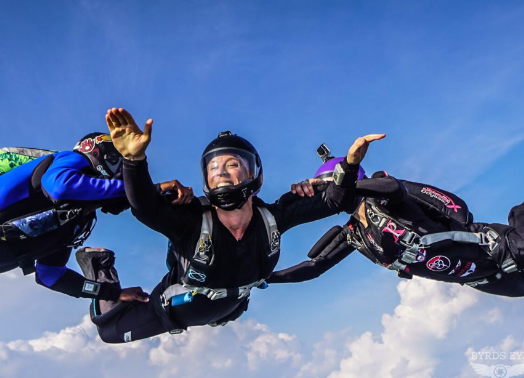
If you’re looking to enhance your skydiving skills, focusing on core strength can tremendously improve your control and stability in freefall. A strong core provides the foundation needed to maneuver effectively and safely during a jump. Here’s how you can train your core specifically for better skydiving control.
1. Understanding the Importance of Core Strength
Your core is not just your abs; it comprises several muscles including the obliques, lower back, and pelvic floor. These muscles work together to stabilize your body and maintain balance during dynamic movements like those experienced in skydiving. When you jump, a strong core helps you maintain an upright position, enabling better control of your fall and preventing uncontrolled spins.
Furthermore, a well-trained core enhances body awareness, which is critical as you navigate through the sky. When your core is strong, you can easily shift your body into different positions without losing stability, allowing you to respond quickly to any changes in your environment. This adaptability is vital for safe and effective skydiving.
-
- Engage in core-focused workouts regularly.
-
- Include stability exercises to improve balance.
-
- Practice body awareness through targeted movements.
-
- Incorporate breathing techniques to enhance core engagement.
2. Key Core Exercises for Skydivers
To train your core effectively, focus on exercises that build strength, stability, and endurance. Planks, for instance, are an excellent exercise that engages your entire core, promoting both strength and endurance. When you perform a plank, ensure your body forms a straight line from head to heels, and hold the position for as long as possible.
Another great exercise is the dead bug, which helps improve coordination between your limbs and strengthens your core. Lying on your back with your arms extended towards the ceiling and your knees bent at 90 degrees, lower your opposite arm and leg towards the floor. This movement trains your core to stabilize your body while engaging in complex movements, much like in freefall.
-
- Incorporate planks into your routine 3 times a week.
-
- Practice dead bugs for improved coordination.
-
- Gradually increase your hold time for planks.
-
- Combine these exercises with cardio for overall fitness.
3. Training Your Core with Skydiving-Specific Drills
Incorporate drills that mimic the actions you’ll take during a skydive. For instance, practicing the arch position can help your body understand the posture needed for stability during freefall. Find a safe space, preferably with a partner, where you can execute controlled arch movements while maintaining core engagement.
Additionally, utilizing a wind tunnel can provide a unique training ground. The experience of floating in a wind tunnel simulates the sensation of freefall. While in the tunnel, focus on maintaining your core engagement to control your position and movements effectively. This practice directly translates to skydive performance.
-
- Practice arch positions on the ground with a partner.
-
- Utilize wind tunnels for real-time feedback on body position.
-
- Engage your core consciously during each exercise.
-
- Record your sessions to analyze your performance and improvements.
4. Recovery and Flexibility for a Strong Core
While strengthening your core is essential, recovery and flexibility should not be overlooked. Proper recovery helps your muscles repair and grow, ensuring that you’re always ready for your next jump. Incorporate stretching routines focusing on your lower back and hip flexors, as these areas can become tight from core workouts.
Yoga is a fantastic complement to core training. It not only improves flexibility but also enhances your balance and body awareness, which are crucial for skydiving. Consider attending a yoga class or following online sessions that focus on core strength and flexibility.
-
- Implement a weekly yoga session for flexibility.
-
- Don’t skip recovery days; they are crucial for muscle growth.
-
- Focus on post-workout stretching to enhance recovery.
-
- Incorporate foam rolling for muscle relaxation.
Training your core for better skydiving control involves a comprehensive approach that includes strength, stability, and recovery. By focusing on targeted exercises and practicing specific drills, you’ll build the foundation necessary to enhance your skydiving experience. Get started today, and consider consulting a trainer for personalized guidance!