
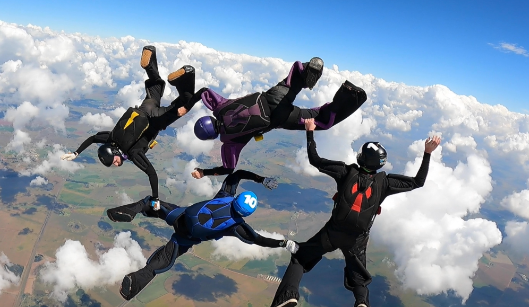
Training for skydiving is more than just facing your fears; it requires specific fitness and strength preparation to ensure safety and enjoyment during your jumps. By establishing a solid physical foundation, you can enhance your performance and reduce the risk of injuries. This guide will help you navigate the essential areas of strength and fitness training tailored for skydivers.
1. Building Core Strength
Your core is vital for maintaining stability and control during freefall and landing. Strong core muscles help you stabilize your body, reduce the risk of injury, and improve your overall skydiving technique. To cultivate core strength, include exercises such as planks, Russian twists, and hanging leg raises in your routine, aiming to perform them at least three times a week.
Incorporating both dynamic and static core exercises will ensure you’re building functional strength that translates directly to skydiving. For instance, while planks build endurance, Russian twists enhance rotational strength, which is helpful when maneuvering your body in the air. Aim for three sets of 15-20 repetitions for dynamic exercises and hold static positions like planks for 30-60 seconds.
-
- Integrate planks and their variations into your workout.
-
- Include rotational exercises like Russian twists.
-
- Incorporate balance exercises to enhance stability.
-
- Focus on both endurance and strength with a mix of workouts.
2. Enhancing Cardiovascular Fitness
Cardiovascular fitness is crucial for skydiving, especially since jumping involves physical exertion leading up to the jump and during landing. Increased stamina translates into better performance, allowing you to stay more focused during your jump. To build up your cardiovascular fitness, aim for at least 150 minutes of moderate aerobic activity each week through jogging, cycling, swimming, or brisk walking.
Interval training can be particularly effective for skydivers, as it improves both aerobic and anaerobic conditioning. For instance, incorporating short bursts of high-intensity activity like sprinting followed by a recovery period can enhance your overall cardiovascular capacity, ensuring you are prepared for the demands of a skydive.
-
- Engage in moderate aerobic activities like running or cycling.
-
- Incorporate interval training into your routine for better endurance.
-
- Try activities like swimming to build lung capacity.
-
- Track your heart rate to monitor intensity and effectiveness.
3. Developing Joint Mobility and Flexibility
Enhancing your joint mobility and flexibility should be a fundamental part of your skydiving training routine. Improved flexibility not only reduces injury risk but also enhances your ability to position your body effectively in the air. To increase mobility, focus on dynamic stretching before workouts and static stretching post-exercise, including hip flexor stretches and shoulder openers.
Yoga can also be a beneficial practice for skydiving athletes, helping you gain both strength and flexibility in a controlled manner. Specific poses like downward dog and pigeon pose can enhance your body’s range of motion, assisting in achieving an aerodynamic form during freefall and a graceful landing.
-
- Incorporate dynamic stretching before workouts.
-
- Practice yoga to improve flexibility and strength simultaneously.
-
- Focus on hip and shoulder stretches to improve skydiving position.
-
- Regularly assess your joints’ range of motion.
4. Strengthening Leg Muscles
Strong legs are essential for a safe landing and effective body control while skydiving. Building leg strength helps you absorb the impact upon landing and maintain stability in freefall. Exercises such as squats, lunges, and deadlifts are highly effective in building lower body strength and should be incorporated into your training regimen at least twice a week.
Focus on both compound exercises like squats for overall strength and isolation movements like calf raises for balance and stability. Aim for three sets of 10-15 repetitions for each exercise, gradually increasing weights as your strength improves. Strong leg muscles will enable you to execute dynamic movements more effectively during your jump.
-
- Incorporate squats, lunges, and deadlifts into your routine.
-
- Increase weights gradually to continue challenging yourself.
-
- Include calf raises to enhance control for landing.
-
- Mix up leg exercises to target different muscle groups.
5. Mental Preparation and Focus
While physical training is crucial, mental preparation is equally important for skydiving. Focus and mental clarity can significantly impact your performance in the sky. Techniques such as visualization, mindfulness, and breathing exercises can help reduce anxiety, build confidence, and improve overall mental readiness for jumps.
To cultivate your mental strength, create a routine that includes visualization techniques by imagining successful jumps and calm landings. Additionally, practice mindfulness techniques to keep your mind focused and your body relaxed in moments of high-pressure situations, enhancing your overall experience in the air.
-
- Engage in daily visualization to imagine successful jumps.
-
- Practice breathing exercises to reduce anxiety.
-
- Incorporate mindfulness practices to enhance focus.
-
- Set realistic mental goals for each training session.
In conclusion, embarking on a fitness and strength training regimen specifically designed for skydiving can significantly improve your performance and safety. By building strength, enhancing cardiovascular fitness, fostering flexibility, and fortifying mental focus, you prepare yourself for the exhilarating experience of skydiving. Begin your training today, and don’t hesitate to consult with professionals to create a tailored plan that suits your individual needs and goals!