
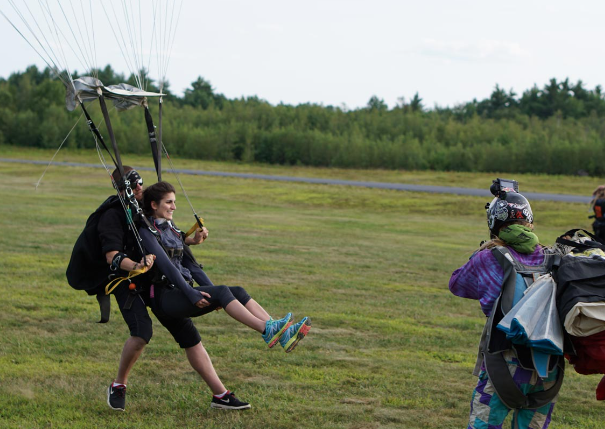
Landing a parachute requires not only skill but also finesse to ensure a safe and comfortable descent. One of the critical techniques every skydiver must master is the flare. This blog post will delve into how to properly execute a flare when landing a parachute, ensuring you touch down smoothly.
1. Understanding the Flare
The flare is a crucial maneuver that allows parachutists to slow down before landing. During the final stages of your descent—usually around 10 to 15 feet above ground—you’ll initiate the flare by pulling down on the toggles of your parachute. This action increases the angle of attack of the canopy, creating extra lift that reduces your vertical speed and allows for a gentler touchdown.
It’s essential to gauge your altitude correctly before executing the flare. If you begin too early, you risk stalling the parachute, which could lead to a harsh landing. Conversely, flaring too late means you won’t achieve the full benefit of reduced descent speed. Always practice your flare during training jumps under the guidance of an instructor to hone your timing skills.
-
- Learn the altitude range for flaring (10-15 feet).
-
- Practice your flare on a simulator if possible.
-
- Monitor your descent speed closely.
-
- Ask for feedback from your instructor during practice jumps.
2. Executing the Flare
To execute the flare effectively, grasp the toggles firmly and begin to pull them down simultaneously. It’s important to pull both toggles evenly to maintain the stability of the canopy. A common mistake is to pull one side more than the other, which can cause the parachute to turn unexpectedly. Make sure your arms are fully extended until you feel the canopy respond, and then pull down gradually.
Your body position is also crucial during the flare. You should maintain a relaxed, upright posture; your legs should be extended downwards while your knees are slightly bent. This stance will help absorb any impact and enhance your overall stability as you approach the ground. A proper body position not only increases your landing safety but also allows you to better control the flare.
-
- Use a firm grip on the toggles.
-
- Ensure even pressure on both toggles.
-
- Maintain a relaxed and upright body posture.
-
- Keep your legs extended with slightly bent knees.
3. Timing the Flare
Timing is the essence of a successful flare. Too early, and you risk a stall; too late, and you may hit the ground hard. As you descend, visualize an imaginary “flare zone” where you will pull the toggles. This zone should be within the recommended altitude, but you should also feel the canopy’s responsiveness to properly gauge the right moment. Observing wind conditions can help as well; if you’re facing an unexpected headwind, you might consider adjusting your timing.
Some experienced skydivers recommend counting “three-two-one” in your head as you approach the ground to time your flare. This method allows you to mentally prepare and react accordingly to the altitude indicators. Practice will also help you develop a better feel for timing as you’ll start recognizing the descent characteristics of your specific parachute model over time.
-
- Visualize your flare zone for better timing.
-
- Consider factors like wind conditions.
-
- Use a counting method to track your altitude.
-
- Seek feedback from experienced jumpers on timing.
4. Preparing for a Safe Landing
Preparation doesn’t stop with just mastering the flare; it’s essential to understand how to land safely once you touch down. Check your surroundings before landing, as terrain conditions can vary significantly. Avoid landing in areas with obstacles or uneven ground to minimize the risk of injury. If you’re landing in a group, be sure to communicate your intentions clearly.
Once you’re about to land, keep your knees bent and prepare to roll your body upon impact. This technique disperses the landing force across your body rather than concentrating it on your legs, which can reduce the possibility of injury. After landing, maneuver to steer clear of potential hazards, securing the parachute as quickly as possible.
-
- Check the landing area and avoid obstacles.
-
- Communicate with others if landing in a group.
-
- Bend your knees for impact absorption.
-
- Immediately move away from hazards once landed.
Mastering the flare is essential for a safe parachute landing, but like any skill, it takes time, practice, and experience. Be sure to consult skilled instructors, participate in training sessions, and always prioritize safety to enjoy your skydiving adventures fully. Take the next step; practice your flare and landing techniques regularly to ensure they become second nature. Happy jumping!