
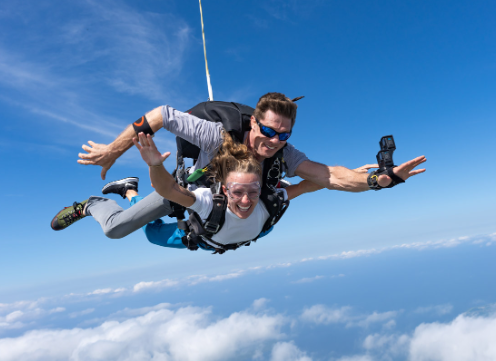
Skydiving is an exhilarating sport that draws adventurers from all walks of life. While the thrill of freefall is unmatched, maintaining the correct body position is crucial for a stable and enjoyable experience. This guide will delve into the essential body positions you need for stable freefall.
1. The Basic Body Position
The fundamental body position in skydiving involves lying flat on your stomach with your arms and legs extended outward. This position maximizes surface area, allowing you to fall more slowly and control your descent. By positioning your body horizontally, you can improve stability and minimize the chances of spinning or flipping during freefall.
When you’re in this position, make sure to keep your head neutral, looking slightly down toward the horizon rather than craning your neck. Your arms should be at shoulder height, spread out to the sides, and your legs should be extended straight behind you. This balanced position helps in achieving a stable, controlled descent.
-
- Maintain a flat body shape, avoiding excessive arching or bending.
-
- Keep your arms extended to encourage stability.
-
- Look slightly forward, not straight down.
-
- Ensure your legs are together but not stiff; relax your body.
2. Adjusting for Stability
Stability in freefall often requires adjustments based on your weight distribution. For instance, if you experience a tendency to spin, you may need to alter your arm or leg positioning. Small adjustments can have a big impact on your center of gravity, leading to a more stable flight environment.
Another key factor is airflow; if one side of your body catches more wind than the other, it can cause unstable rotation. To counter this, practice shifting your arms or legs slightly until you find a position where airflow is balanced. This will help you maintain stability and control throughout your freefall.
-
- Experiment with small adjustments to your limbs for better balance.
-
- Pay attention to airflow hitting different parts of your body.
-
- Use your arms and legs to make gentle corrections.
-
- Communicate with your instructor about stability issues.
3. Mastering the Arch Position
The arch position is another essential technique for stable freefall. This involves bending at the hips while keeping your back flat and arms extended. It helps to further reduce the fall rate and enhances stability by channeling airflow efficiently over your body. Understanding how to master the arch will improve your overall skydiving experience.
When entering the arch position, focus on keeping your chin slightly tucked and your hips pushed forward. This will create a more aerodynamic shape and prevent you from turning or falling headfirst. A well-executed arch can significantly enhance safety, giving you more time to enjoy the views before it’s time to deploy your parachute.
-
- Practice the arch position before jumping; get comfortable with it.
-
- Visualize the position in your mind to reinforce muscle memory.
-
- Keep your limbs relaxed while maintaining your arch.
-
- Align your torso and head toward the ground for maximum stability.
4. Common Mistakes to Avoid
Even experienced skydivers can make mistakes regarding body position, and these blunders can lead to instability or dangerous situations. One common error is over-arching or tucking in the legs and arms too tightly, which can lead to unintentional flips or spins. Recognizing these mistakes early on will save you a lot of trouble during freefall.
Another frequent issue is failing to maintain a neutral head position. Your head should not tilt backwards, as this can disrupt your center of gravity and contribute to instability. Always strive for a neutral, relaxed head position to maintain stability during your descent.
-
- Avoid over-arching your back; maintain a flat, horizontal profile.
-
- Keep your arms and legs comfortably extended, not stiff.
-
- Correct your head position early if you notice it tilting.
-
- Regularly practice coordinating body movements for balance.
Skydiving is not just about the adrenaline rush; it’s also about mastering the craft. By focusing on the correct body positions, you can ensure a safer, more enjoyable freefall experience. Take the time to practice these techniques and consult with professional instructors for guidance. Your skydiving journey awaits!