
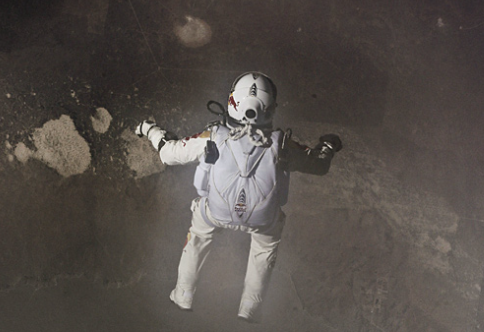
The Red Bull Stratos mission, which took place on October 14, 2012, was an unprecedented leap into the realms of science and human capability. Spearheaded by Austrian daredevil Felix Baumgartner, the mission aimed to break the sound barrier through a skydive from the stratosphere, capturing the attention of millions worldwide. This post provides a comprehensive breakdown of the mission and its lasting impacts on various fields.
1. The Mission Overview
The Red Bull Stratos mission began with significant preparation and scientific research. Felix Baumgartner ascended to an astonishing altitude of 128,000 feet using a helium balloon, making his jump from the stratosphere. The capsule he traveled in was equipped with advanced technology necessary for a safe and successful mission, including life-support systems and communication devices.
This venture was not only about the jump; it involved extensive collaboration among engineers, scientists, and sponsors. The mission aimed to collect data on the effects of extreme altitude on the human body, paving the way for advancements in space travel and aerospace medicine, and demonstrating the limits of human endurance.
-
- Understand the mission’s objectives before analyzing the data.
-
- Research the technology used in the capsule and its importance.
-
- Familiarize yourself with the team behind the mission for depth.
-
- Watch the full jump footage to appreciate the physics involved.
2. The Science behind the Jump
One of the primary goals of the Red Bull Stratos mission was to study the human body’s reaction to extreme environments. As Baumgartner ascended to 128,000 feet, he experienced a drop in atmospheric pressure and temperature, both of which have critical effects on human physiology. The descent offered vital data on how the body copes with these factors, especially in relation to high-altitude jumps.
Furthermore, Baumgartner’s jump was executed in a specially designed pressure suit that protected him from the harsh conditions of the stratosphere. This suit not only kept him safe from hypoxia and extreme cold before he reached freefall but also provided essential monitoring for health and safety data during the jump. Such innovations can significantly benefit future exploration missions and have applications in space medicine.
-
- Note the physiological changes during high-altitude flights.
-
- Understand how pressure suits enhance safety and performance.
-
- Recognize the relevance of the data collected for aerospace medicine.
-
- Consider applications of the technology in other extreme environments.
3. Lasting Impacts on Space Exploration
The Red Bull Stratos mission served as an inspiration for future space exploration efforts. The data collected provided valuable insights not only into human endurance at high altitudes but also into technological advancements required for more ambitious space missions. It sparked discussions about what humans can achieve beyond Earth and how we can push the boundaries of exploration.
Additionally, Baumgartner’s success proved that private companies can play a pivotal role in scientific achievements, leading to increased investment in commercial space projects. One significant outcome was the renewed focus on space tourism, with several companies exploring the possibilities of launching civilians into space. This mission resonated with a global audience, making space exploration feel more accessible and exciting than ever before.
-
- Consider how public interest shapes funding in space missions.
-
- Follow developments in commercial space travel inspired by Stratos.
-
- Engage in discussions about ethical responsibility in space exploration.
-
- Stay informed about technological advancements in aerospace fields.
4. The Cultural and Media Impact
The Red Bull Stratos mission was more than just a scientific endeavor; it became a cultural phenomenon. Streamed live, the event garnered over 8 million viewers, making it one of the most-watched live broadcasts in YouTube’s history. The mission captivated audiences worldwide, not just for the thrill of the jump but also for its embodiment of human achievement and courage.
Moreover, the mission inspired numerous documentaries and sparked intense media coverage, highlighting the integration of adventure sports with science and technology. This event has encouraged other organizations to pursue ambitious projects while utilizing digital media to engage the public. It showcased how social media can amplify excitement and involvement in scientific endeavors.
-
- Explore how the mission affected public perception of science.
-
- Research other events that have combined adventure and science.
-
- Engage with digital platforms that promote scientific learning.
-
- Follow media narratives surrounding advancements in extreme sports.
In conclusion, the Red Bull Stratos mission not only pushed the limits of human capability but also advanced our understanding of the effects of altitude on the human body. Its lasting impacts on space exploration, technology development, and cultural engagement have opened new avenues for future explorations. For those inspired by this mission, consider following advancements in aerospace technology or engaging with communities centered around exploration and adventure. Every leap begins with a single step into the unknown!